The Latin Cross: Symbolism, Design, and Modern Relevance
The Latin Cross stands as one of the most recognizable symbols in human history. Its clean vertical beam intersected by a shorter horizontal bar near the top carries centuries of meaning, from deep religious significance to widespread cultural recognition. Whether encountered in a cathedral, on a digital interface, or within a piece of graphic design, this simple yet powerful form communicates instantly. Understanding the Latin Cross goes far beyond recognizing its shape. It involves appreciating its origins, its design nuances, and how it continues to function in contemporary workflows, branding, and personal expression.
Defining the Latin Cross: More Than a Simple Shape
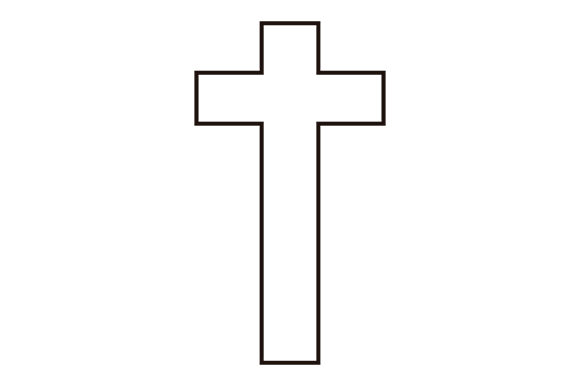
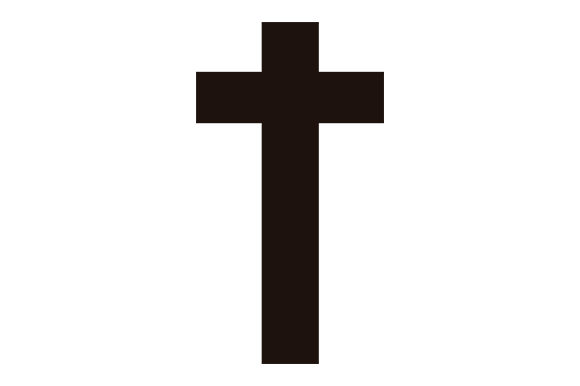
At its most basic, the Latin Cross consists of two lines. The vertical post extends upward, and the horizontal beam crosses it at a point roughly one-third of the way down from the top. This gives the cross a distinct asymmetry. The longer lower portion of the vertical bar creates a sense of grounding and stability, while the shorter upper section draws the eye upward. This proportional distinction is what separates the Latin Cross from other cross variations such as the Greek Cross, where both beams are equal in length and intersect at the center.
The visual weight of the Latin Cross is not accidental. Its proportions have been refined over centuries through art, architecture, and liturgy. In typography and digital design, the Latin Cross often appears as a glyph — Unicode character U+2716 or U+271D — making it accessible across platforms and devices. Designers working on logos, icons, or user interfaces regularly encounter the Latin Cross as a symbolic element that requires careful placement and scaling. Its vertical emphasis makes it particularly suited for tall, narrow spaces, while its horizontal arm provides a balancing counterpoint.
Historical Roots and Enduring Purpose
The Latin Cross is inseparable from the Christian tradition. It represents the instrument of crucifixion and, for believers, the central event of redemption and sacrifice. Early Christians were cautious about depicting the cross openly due to persecution, but by the fourth century, following the Edict of Milan, the Latin Cross became a prominent symbol of faith. Emperors, artists, and theologians alike embraced it as a visual shorthand for doctrine, hope, and identity.
Beyond its religious function, the Latin Cross has served as a marker of community, a symbol of charity, and a sign of remembrance. It appears on graves, in memorials, on national flags, and within the emblems of countless organizations. The Red Cross, for example, adopted a modified version of the symbol to denote medical neutrality and humanitarian aid. In this context, the Latin Cross communicates protection and service, stripped of overt theological weight but retaining its visual authority.
The Latin Cross also plays a functional role in architecture and urban planning. Church floor plans often take the shape of a Latin Cross, with a long nave forming the vertical arm and transepts creating the horizontal arms. This cruciform design guides movement, frames altars, and creates a sense of sacred progression. Architects and historians studying ecclesiastical buildings routinely analyze how the Latin Cross layout influences light, sightlines, and congregational experience.
Modern Workflows and Design Applications
In today's design and development environments, the Latin Cross appears across a surprising range of contexts. Graphic designers use it in logo creation for religious organizations, medical charities, and heritage brands. Its simplicity makes it adaptable to minimalist aesthetics, while its historical weight adds depth to identity systems. When creating a mark that needs to communicate trust, tradition, or care, the Latin Cross often emerges as a leading candidate.
Digital product designers also encounter the Latin Cross regularly. Icon sets for health, spirituality, or location-based services frequently include a cross symbol. In mapping applications, a Latin Cross might denote a church, a hospital, or a cemetery. UX designers must consider how users interpret these icons, especially in multicultural interfaces where the cross carries different connotations. A user in one region may see a place of worship, while another may view it as a medical symbol. Clarity and context become essential.
Typography and font design present another area where the Latin Cross demands attention. Many typefaces include a cross character, and its design must harmonize with the overall style of the font. A serif cross in a traditional typeface will have different proportions and stroke weights than a sans-serif cross in a modern UI font. Font designers pay close attention to the crossbar position, the terminal shapes, and the overall balance. Even small adjustments can shift the cross from elegant to awkward.
Practical Considerations for Using the Latin Cross
Anyone incorporating the Latin Cross into a project should weigh several factors. First, consider the audience. In a secular or multireligious context, the cross may carry assumptions that need to be acknowledged or addressed. A brand using the Latin Cross for a healthcare app might benefit from user research to ensure the symbol reads correctly. Second, consider the cultural and regional variations. In some parts of the world, the Latin Cross is universally understood, while in others, different cross forms dominate.
Third, think about scale and resolution. The Latin Cross relies on thin lines and precise intersections. At small sizes, such as in a mobile app icon or a favicon, details can blur. Designers should test the cross at various dimensions to maintain clarity. Thickening strokes slightly or adding a subtle outline can preserve legibility. For print applications, consider the substrate and ink behavior. A delicate cross might work well on coated paper but become muddy on uncoated stock.
Fourth, consider the ethical dimension. The Latin Cross is a sacred symbol for millions of people. Using it purely for decorative effect or in ways that trivialize its meaning can cause offense. Brands and individuals should approach the symbol with respect, even when using it in a non-religious context. This does not mean avoiding the symbol entirely, but rather using it thoughtfully and with intention.
Scenarios and Recommendations Across Industries
In the world of web development, the Latin Cross appears in navigation menus, footer icons, and interactive elements. A church website might use the cross as a home button or a symbol of welcome. A funeral home directory might use it to denote faith-based services. Developers should ensure the cross renders correctly across browsers and operating systems, using either Unicode characters or SVG icons for scalability. Accessibility also matters. The cross should have appropriate alt text or ARIA labels so screen readers can convey its meaning to users with visual impairments.
For print designers working on event materials, such as wedding programs, memorial cards, or religious pamphlets, the Latin Cross often serves as a focal point. Pairing it with complementary typography and a restrained color palette preserves its dignity. Gold, deep blue, and white are traditional choices, but modern applications may explore monochromatic or minimal treatments. The key is to let the cross breathe. Crowding it with other elements diminishes its impact.
In educational materials, the Latin Cross can illustrate historical timelines, architectural styles, or religious studies. A diagram comparing cross types — Latin, Greek, Celtic, Tau — helps students differentiate forms and understand their origins. Teachers and curriculum designers can use the Latin Cross as a case study in symbolic evolution, showing how a single shape acquires layers of meaning over time.
For hobbyists and makers, the Latin Cross offers a satisfying project. Woodworkers, laser engravers, and jewelry designers often create cross pendants, wall hangings, or ornaments. Understanding the proportions that make a Latin Cross visually pleasing — the ratio of vertical to horizontal length, the position of the crossbar, the taper of the arms — can elevate a simple design into something elegant. Many makers experiment with materials, from reclaimed wood to precious metals, each lending its own character to the form.
Cultural Sensitivity and Broader Awareness
While the Latin Cross is widely associated with Christianity, it is not the only cross form with cultural significance. The Greek Cross, the Celtic Cross, the Maltese Cross, and the Coptic Cross each carry their own histories and meanings. Using the Latin Cross exclusively in a multicultural setting may overlook or marginalize other traditions. Designers and communicators should be aware of the full spectrum of cross symbolism and choose accordingly.
In interfaith and secular spaces, the Latin Cross can still appear as a historical or architectural reference rather than a devotional one. Museums, historical societies, and cultural centers display crosses as artifacts of human craftsmanship and belief. In these contexts, the Latin Cross functions as an object of study rather than worship. Presenting it with informative labels and contextual framing helps viewers appreciate its significance without misunderstanding the intent.
The Latin Cross also appears in contemporary art, where artists reimagine its form to comment on faith, culture, or identity. These works can be provocative or reverent, but they always rely on the viewer’s recognition of the symbol. Understanding the baseline meaning of the Latin Cross allows audiences to engage with these artistic statements on a deeper level.
Observations on Long-Term Relevance
The Latin Cross shows no sign of fading from public consciousness. Its simplicity gives it staying power, while its depth of meaning ensures it remains a subject of discussion and interpretation. As digital interfaces continue to evolve, the cross will be redrawn, refined, and recontextualized. As cultures shift, the cross will be reexamined and reunderstood. But its essential form — that vertical line crossed by a horizontal one — will persist.
For anyone working with symbols, the Latin Cross offers a masterclass in effective design. It is minimal yet expressive, ancient yet immediately relevant. It works at the scale of a cathedral and at the scale of a pixel. It can signify hope, memory, service, or identity depending on context. Learning to work with the Latin Cross means learning to respect its proportions, its history, and its audience. That combination of technical awareness and human understanding is what makes the symbol endure.
Whether you are a designer, a developer, a historian, or someone simply curious about the marks we use to communicate, the Latin Cross repays close attention. It is a line and a line crossing it. And it holds within that intersection a world of meaning.