Making Faith Stick: The Quiet Power of Sermon Notes for Kids
Every Sunday, millions of children sit through sermons designed for adult attention spans and abstract thinking. For decades, the gap between what is said from the pulpit and what a child actually absorbs has been accepted as inevitable. But something is shifting. Parents, educators, and church leaders are waking up to a simple yet transformative practice: providing structured, engaging sermon notes for kids. This isn't about keeping children quiet during service. It is about equipping them with a tool that builds spiritual literacy, critical listening, and personal reflection habits that last a lifetime.
The rise of sermon notes for kids reflects a broader cultural move toward intentional faith formation. In an age of digital distraction and shortened attention spans, families are looking for practical ways to make religious education feel less passive and more participatory. The quiet act of taking notes—adapted for young minds—turns a child from a spectator into an active learner. And that shift matters more now than ever.
Why Sermon Notes for Kids Matter Right Now
Families today face a unique challenge. Information is everywhere, but depth is rare. Children are bombarded with fast-paced content that rewards quick reactions rather than thoughtful engagement. In this environment, teaching a child to sit, listen, and capture a meaningful idea feels almost countercultural. Yet precisely because of this, sermon notes for kids have become a practical counterbalance.
When a child takes notes during a sermon, they are practicing something increasingly scarce: sustained attention. They learn to filter what matters, to ask questions, and to connect a story or teaching to their own life. For parents and educators, this is not just about spiritual growth. It is about developing a mindset of curiosity and discipline that transfers to school, relationships, and future learning.
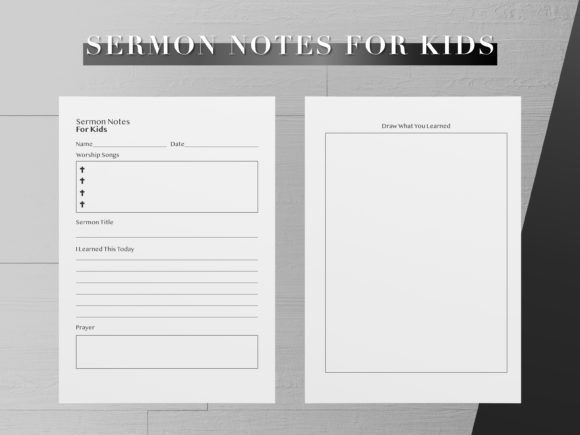
Current trends in children's faith formation emphasize agency over passivity. Kids are not empty vessels waiting to be filled. They are active meaning-makers. Sermon notes designed for their developmental level honor that reality. A well-designed note page with prompts for drawing, simple fill-in-the-blank questions, and space for "one thing I learned today" invites a child to own their experience. It shifts the question from "What did the preacher say?" to "What did I discover?"
From Bullet Points to Big Ideas: The Evolution of Children's Sermon Engagement
The practice of taking notes during religious services is not new. Adults have long relied on outlines, journals, and margin scribbles to capture insights. But the idea of adapting this practice specifically for children is relatively recent. Early attempts often involved handing a child a blank piece of paper and a crayon, with mixed results. The real breakthrough came when creators began to think like educators rather than just caregivers.
Modern sermon notes for kids are designed with an understanding of developmental stages. A five-year-old processes information differently than a twelve-year-old. Early versions might have been simple coloring sheets with a verse at the bottom. Today, thoughtful resources include age-appropriate prompts that ask a child to draw what they heard, circle an emotion they felt during the story, or write a question they still have. This evolution mirrors broader shifts in educational philosophy, where open-ended inquiry is valued over rote recall.
What has made this practice grow in popularity is the rise of printable resources and digital templates shared among communities. Parents no longer have to invent something from scratch each week. A quick search yields dozens of options tailored to different sermon styles, age groups, and theological traditions. This accessibility has lowered the barrier for families who want to try it but felt unsure where to start. The result is a grassroots movement of parents and volunteers who are quietly reshaping how children experience church.
How the Digital Age Changed the Conversation
The proliferation of screens has a complicated relationship with attention. While it fragments focus, it also offers tools that can help. Digital sermon note templates for kids are now shared widely on social platforms and parenting groups. Some families use tablets with interactive note sheets, while others print simple PDFs. The format matters less than the intention behind it.
Interestingly, the digital shift has also made sermon notes for kids more visual and creative. Kids can insert photos, use drawing apps, or record a short audio reflection alongside their written notes. This multimodal approach respects how children naturally learn and express themselves. It also acknowledges that for many modern families, faith formation happens across multiple contexts—not just in a pew on Sunday morning, but in the car ride home, around the dinner table, and during quiet moments before bed. Sermon notes become a bridge between those moments.
Practical Implications for Parents, Educators, and Church Leaders
If you are a parent trying to help your child engage more deeply with what they hear at church, sermon notes for kids offers a straightforward entry point. The key is to match the tool to the child. A preschooler needs space to draw and a single simple question. An older elementary child can handle a few guided prompts and a sentence or two of writing. A middle schooler might appreciate a structured outline that mirrors what adults use, but with less text and more room for personal reaction.
For educators and children's ministry leaders, integrating sermon notes into the weekly rhythm can transform how kids participate. Instead of treating the children's sermon as a separate event, the note sheet becomes a thread that connects the main service content to the classroom discussion. This alignment reinforces the idea that children belong to the whole worshiping community, not just a separate program.
Church volunteers who work with kids often report that using note sheets reduces behavior issues during service. When a child has a focused task, they are less likely to fidget or distract others. But the benefits go deeper than classroom management. Children who regularly use sermon notes begin to ask better questions. They recall details from previous weeks. They start to see patterns and themes. This is the fruit of consistent practice, and it is observable within just a few months.
Creating a Culture of Reflection at Home
The most powerful use of sermon notes for kids may happen outside the church building. When a child brings their note sheet home, it becomes a conversation starter. A parent can ask, "What did you draw today?" or "Tell me about the question you wrote." These conversations are low-pressure and child-led. They allow faith to become a natural topic of family dialogue rather than a formal lesson.
Some families take this a step further by keeping a binder of sermon notes over the course of a year. Looking back together reveals growth, both spiritual and cognitive. A child might laugh at a drawing they made months ago or express surprise at an insight they recorded. This practice normalizes reflection as a lifelong habit. It also gives children a sense of their own development, which builds confidence and a healthy sense of identity within their faith community.
What Makes a Good Sermon Note Resource for Kids
Not all sermon notes for kids are created equal. The most effective ones share a few common qualities. First, they are visually inviting without being overwhelming. White space matters. Too much clutter distracts from the core message. Second, they include a mix of open-ended and guided prompts. A child needs some structure to get started, but also room to express their own thoughts. Third, they are flexible. A note sheet that works for a talkative, artistic child may not work for a quieter, analytical child. Offering variety within the same basic format respects these differences.
Another important factor is theological sensitivity. The best resources use language that is accessible without being simplistic. They avoid jargon but do not shy away from real ideas. Children can handle depth when it is presented concretely. A good sermon note sheet helps a child connect a scriptural concept to their everyday experience. For example, instead of asking "What does this parable mean?", a prompt might ask "When have you felt like the person in this story?" This kind of question invites empathy and self-awareness.
Observations from the Field
Many families who adopt sermon notes for kids report an unexpected benefit: parents themselves become more engaged. Preparing a note sheet for a child forces an adult to think about what the core message of the sermon really is. It is a discipline that sharpens listening for everyone involved. Some parents have started keeping their own sermon journal alongside their child, creating a shared practice that deepens their connection.
Educators in children's ministry have noticed that kids who use sermon notes regularly develop a vocabulary for talking about faith. They use words like "gratitude," "forgiveness," and "promise" with more confidence. This language development is a sign that the content is moving from passive hearing to active understanding. It is one thing to hear a word in a sermon. It is another to write it down and explain it in your own words.
Getting Started Without Overcomplicating It
If the idea of sermon notes for kids feels daunting, start small. A single sheet of paper with three simple prompts can be enough. The goal is not to create a perfect resource. The goal is to create a consistent practice. Here is a simple framework that works across many contexts:
- One thing I heard: The child captures one main idea from the sermon. This can be a drawing, a word, or a short sentence.
- One question I have: Encouraging curiosity normalizes doubt and inquiry as part of faith, not a threat to it.
- One thing I want to remember: This prompt helps the child internalize the message and connect it to their own life.
This three-part structure is adaptable and non-intimidating. It works for children as young as four and can be scaled up as the child grows. Over time, the prompts can become more nuanced and the format more elaborate. But the core habit of capturing, questioning, and remembering remains constant.
A Note for Educators and Creators
If you create resources for families, consider designing sermon notes for kids that acknowledge the real constraints of Sunday morning. Parents are often juggling multiple children, logistics, and their own need to worship. A resource that requires complicated printing, preparation, or explanation will be used once and forgotten. The most beloved resources are those that are intuitive, reproducible, and immediately usable. Think less about feature creep and more about consistency. A simple sheet that a parent can grab and hand to a child in under ten seconds is more valuable than an elaborate kit that requires assembly.
For creators building digital templates, consider formats that work across devices. Many families access resources from a phone while sitting in the car before service. A clean PDF that renders well on a small screen and can be printed later is a practical choice. Offering both a digital fillable version and a print-ready version respects different family workflows.
Sermon Notes for Kids as a Lifelong Gift
What starts as a simple piece of paper on a Sunday morning can become something much larger. The habit of listening carefully, capturing what matters, and reflecting on it privately is a skill that serves a person well beyond childhood. In a world that constantly pulls attention in a thousand directions, the ability to focus on a single message and draw meaning from it is rare and valuable.
Families who embrace sermon notes for kids are not just helping their children get through a service. They are planting seeds of attentiveness, curiosity, and spiritual self-awareness. They are telling their children, by their actions, that faith is something worth thinking about, questioning, and remembering. That message, delivered week after week, has a quiet power that no single sermon can match.
Whether you are a parent looking for a practical tool, an educator designing resources for a community, or a church leader hoping to deepen children's engagement, the path forward is simple: start with a blank page, a willing child, and a few thoughtful prompts. The rest unfolds naturally.