Faith Is Taking the First Step: Embracing Action Before Certainty
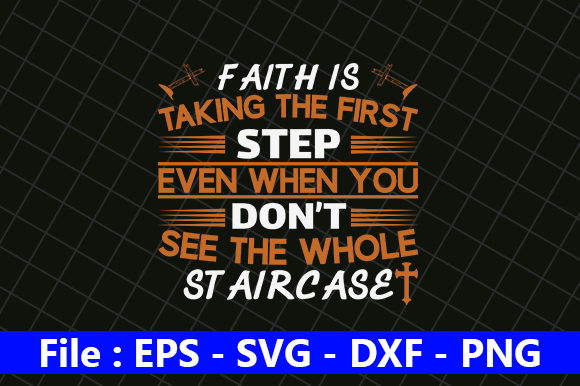
Few quotes capture the essence of courage and conviction as powerfully as the words often attributed to Dr. Martin Luther King Jr.: "Faith is taking the first step even when you don't see the whole staircase." This simple yet profound statement reframes faith not as blind belief or passive waiting, but as active, forward-moving trust. In a world that craves guarantees and clear outcomes, this definition challenges us to act before we have all the answers.
For general readers seeking clarity, this article explores what this kind of faith really means, why it matters in modern life, and how you can apply it to work, relationships, creativity, and personal growth. Whether you are facing a career decision, starting a new project, or navigating uncertainty, understanding faith as a first step can transform how you approach the unknown.
What Does "Taking the First Step" Really Mean?
At its core, the quote redefines faith from a noun into a verb. Faith is not something you have; it is something you do. The first step represents a commitment to move forward despite incomplete information. You do not need to see the entire staircase—only enough light to take one step.
This concept aligns with what psychologists call the action bias: the tendency to favor doing something over doing nothing when faced with uncertainty. Waiting until you have total clarity often leads to paralysis. Taking the first step, even imperfectly, generates momentum, feedback, and learning that no amount of planning can provide.
The staircase metaphor is especially apt because it acknowledges that the path is not a straight line. There are landings, turns, and steps you cannot see from the ground floor. Faith does not mean pretending you see the whole staircase; it means trusting that each step will reveal the next.
Why the First Step Matters More Than the Final Destination
Many people equate faith with certainty about outcomes. They think faith means being sure that everything will work out perfectly. But the quote suggests otherwise: faith is not about knowing the outcome; it is about starting anyway.
Consider the difference between a novice and an expert. The novice often waits for perfect conditions, complete knowledge, or a guarantee of success. The expert understands that action produces clarity. A writer does not wait for inspiration to strike before sitting down to write; the act of writing itself invites inspiration. An entrepreneur does not wait for a proven business model; she tests, learns, and pivots.
This shift in mindset is liberating. It frees you from the burden of having to know everything before you begin. It also reframes failure not as a verdict on your worth, but as a data point that informs your next step.
The Psychology of Taking the First Step
Research in behavioral psychology supports the wisdom of this quote. The Zeigarnik effect shows that people remember uncompleted tasks better than completed ones. Starting a task creates a mental tension that your brain wants to resolve, making it more likely that you will continue. The first step is often the hardest because it requires overcoming inertia, fear, and the comfort of the status quo.
Once you take that step, several things happen:
- Momentum builds: Action begets action. Each small step reduces the psychological distance to your goal.
- Fear diminishes: The unknown becomes known as you gather real-world feedback. What once seemed terrifying becomes manageable.
- Learning accelerates: You gain information that no amount of research could provide. This new knowledge informs your next step more accurately than any forecast.
- Identity shifts: You begin to see yourself as someone who takes action, not just someone who dreams or plans.
Common Misunderstandings About Faith
Many readers carry misconceptions about what faith means in this context. Let us clarify a few:
- Faith is not blind optimism. Taking the first step does not mean ignoring risks or pretending challenges do not exist. It means acknowledging uncertainty and acting anyway, with open eyes.
- Faith is not passivity. Some people mistake faith for waiting—waiting for a sign, a perfect moment, or external confirmation. This quote insists that faith is the opposite of waiting; it is movement.
- Faith is not a single leap. The staircase image emphasizes incremental progress. Faith is not one giant jump but a series of small, deliberate steps.
- Faith is not about guarantees. You may take the first step and discover the staircase leads somewhere unexpected. That is not failure; it is learning. Faith allows for course correction.
Faith in Action: Real-Life Examples
To make this concept tangible, consider how faith as a first step appears across different domains of life:
In Career and Business
A professional considering a career change may feel paralyzed by the fear of making the wrong move. Taking the first step might mean signing up for one course, having a single informational interview, or updating a resume. These small actions do not commit you to a full career shift, but they open doors and provide information that informs your next decision. The entrepreneur who launches a minimum viable product before perfecting it is practicing this kind of faith.
In Education and Learning
A student struggling with a difficult subject may feel overwhelmed by the volume of material. The first step could be opening the textbook for five minutes, watching one tutorial, or writing down three questions. Learning is rarely a linear process; it requires trusting that understanding will emerge through engagement, not before it.
In Creativity and Art
Every artist faces the blank page, the empty canvas, or the silent instrument. The first step—a brushstroke, a sentence, a chord—is an act of faith. Creative work cannot be fully planned in advance. It unfolds through the process of making. The sculptor does not see the finished statue in the marble; she chips away and discovers it step by step.
In Relationships
Vulnerability is a first step. Saying "I care about you" or "I need help" or "I was wrong" requires faith because you cannot control how the other person will respond. Yet without that first step, deeper connection remains out of reach.
In Daily Habits and Personal Growth
Anyone who has tried to build a habit knows that starting is the hardest part. The first step toward fitness might be putting on your shoes. The first step toward a cleaner home might be setting a five-minute timer. These micro-actions are small enough to overcome resistance, yet powerful enough to trigger momentum.
How to Cultivate Faith as a First Step
Understanding the concept is one thing; practicing it is another. Here are actionable strategies for readers who want to embody this kind of faith:
Start Smaller Than You Think You Need To
If the first step still feels too big, break it down further. The goal is not to take a heroic leap but to take a step so small that it feels almost trivial. This lowers the barrier to entry and reduces fear. Over time, small steps compound into significant progress.
Embrace Imperfect Action
Perfectionism is the enemy of the first step. Give yourself permission to start badly. Write a rough draft. Make a clumsy attempt. Take a step that is not perfectly aligned with your ultimate vision. You can refine later. The key is to begin.
Focus on What You Can Control
Uncertainty often feels overwhelming because we focus on what we cannot control. The first step should be something entirely within your control. You cannot control whether a job offer comes, but you can control sending an application. You cannot control whether your art is loved, but you can control creating it.
Reframe "Not Knowing" as a Signal to Start
Instead of interpreting uncertainty as a warning sign, see it as a cue that movement is needed. Not knowing the whole staircase is not a reason to stay at the bottom; it is the very condition that makes faith necessary and meaningful.
Build a Support System
Taking the first step is easier when you are not alone. Share your intention with a trusted friend, mentor, or community. Accountability and encouragement can help you move past initial hesitation.
Why This Definition of Faith Matters Now
In an era of information overload, rapid change, and constant uncertainty, the ability to act without complete knowledge is not just a spiritual ideal—it is a practical necessity. The modern world rewards those who can navigate ambiguity, experiment, and adapt. Waiting for certainty is a luxury the future does not afford.
Whether you are launching a startup, learning a new skill, healing from a loss, or simply trying to live with more intention, faith as a first step offers a sustainable path forward. It acknowledges your fear without letting it stop you. It honors the unknown without being paralyzed by it.
Conclusion: The Staircase Reveals Itself One Step at a Time
Faith is not about having all the answers. It is not about being fearless or foolish. It is about recognizing that the only way to reach the top of the staircase is to take the first step—and then the next, and the next. The light you need will come, but only after you start moving.
If you are standing at the bottom of your own staircase today, consider what one small step you can take right now. It does not have to be perfect. It does not have to be brave. It just has to be a step. That is enough. That is faith in action.
This article is written for educational and inspirational purposes. The core insight—that faith is taking the first step even when you cannot see the whole staircase—has been attributed to Dr. Martin Luther King Jr. and continues to inspire people across cultures and contexts to move forward with courage and trust.